

by Peter Bohmer
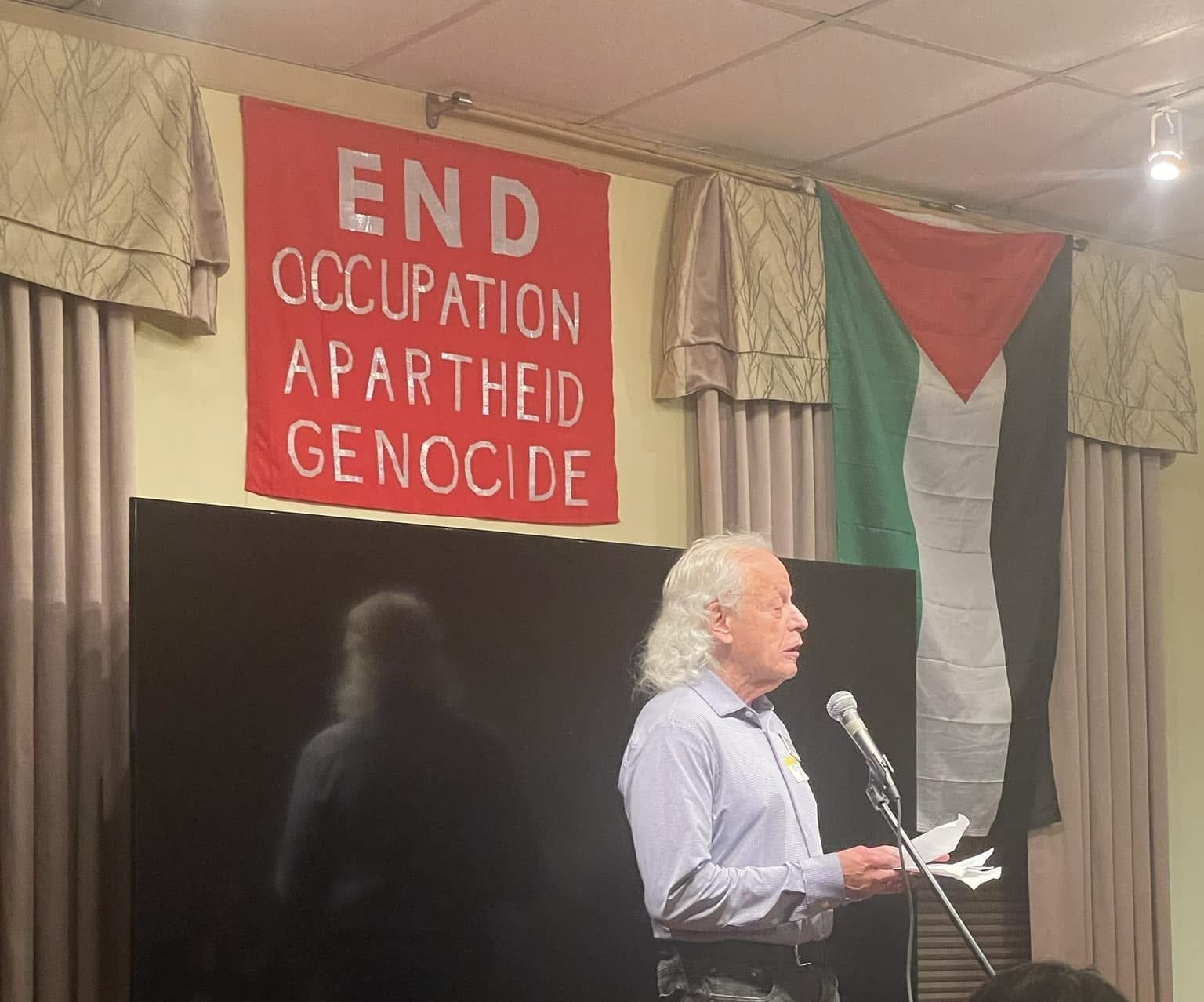
This is the second part of the talk given by Peter Bohmer on Saturday, September 19, 2026 at the “United in Solidarity: Our Response to Hierarchy and Domination” conference at the University of Vienna, Austria. The first part appeared in the last online issue of Works in Progress. The speech has been modified for brevity and clarity.
Critical Solidarity
In the late 1960’s and 1970’s, much of the New Left was in solidarity with two major movements. One was the anti-war movement for Vietnam and its heroic fight against the United States. The other was the victorious Cuban Revolution. To me, a part of the New Left, looking back 50 years later, our positions were right. These were positive alternatives for the Global South — substantial land reform, free medical care and education, full employment, subsidizing basic needs, and anti-imperialism. Many of us were critical of Cuban support of the Soviet invasion of Czechoslovakia in 1968, but our overall support for Cuba tended to be uncritical. We convinced ourselves that Vietnam and Cuba were more democratic, less bureaucratic, and less top-down — and that workers had more power in those societies than they really did. Our values were good, but we didn’t see these negative aspects. This reminds me of many people today idealizing Rojava and the Zapatistas, who certainly deserve solidarity and are positive alternatives to neoliberal capitalism, but these communities and regions are not as liberatory and socialist as they are idealized to be.
I am advocating for a position of critical support. We should respect self-determination and not require that movements we support to share all our positions. However, we must also be discerning when the organizations and political parties challenging the U.S. do not have liberatory politics themselves: when they are patriarchal or sectarian towards other religions and ethnicities, or when their political project is not aimed at improving the lives and power of the popular classes. It is important to carefully investigate the real situation and not accept the overly negative portraits of revolutionary groups painted by Western media, nor uncritically support a group solely because they challenge U.S. power. Critical does not mean finding excuses to not be in solidarity. However, the more we are in active solidarity with liberation movements and governments resisting U.S. domination and intervention, the more we have the right to also offer some criticism.
In the 1980’s, a period of neoliberalism and right-wing ascendancy and rule in many parts of the world, approximately 100,000 solidarity activists from the U.S. went to Nicaragua. Activists supported the Sandinista government and leftist movements there between 1979, when the Sandinistas took power, until 1990 when they lost the election. Many went to experience a society that was resisting the CIA-backed Contras and U.S. subversion — David vs Goliath. There seemed to be a socialism developing that was also democratic; the “New Left” coming to power. I worked for one of the Sandinista ministries in 1988, the Nicaraguan Institute of Social Security.
A major group in solidarity with the El Salvadoran revolutionary struggle that formed in 1980 and still continues today is CISPES, Committee in Solidarity with the People of El Salvador. It supported with literature, rallies, demonstrations, direct action, and material aid for the FMLN — the united group fighting the U.S. backed right wing governments there. CISPES supported the social movements in El Salvador, including unions and the major women’s organization. CISPES organized visits of its members to go to El Salvador to meet with courageous organizers there. It worked in coalition with religious groups that opposed U.S. intervention. The movement in the U.S. prevented a U.S. invasion which was a victory. However, we couldn’t stop the damage to these countries and the killing of many militants which is an important factor in the non-progressive development of these societies since the 1990’s.
In Nicaragua in the 1970s, and El Salvador and Guatemala in the 1980s, there were several guerilla organizations fighting their reactionary, U.S. supported governments. The Left united in these three cases, although as separate organizations: as the FSLN (also known as the Sandinistas) in Nicaragua; the FMLN in El Salvador, and the UNRG in Guatemala. Solidarity groups in the U.S. supported these three coalitions rather than the individual guerilla organizations. It is wrong for solidarity groups to pick a single organization to support when there are more than one who are deserving of support. It is us choosing who we prefer instead of the people of the country involved in a revolutionary movement. For example, in South Africa, although I personally preferred the politics of the African National Congress ANC for their inclusiveness and for their socialist program over the Pan African Congress (PAC), I thought we should be in solidarity with both. In retrospect, we should have also been in critical support of both the two main liberation groups in Zimbabwe, ZAPU and ZANU, not just ZANU. In other anti-colonial struggles in southern Africa, there were groups that espoused decolonization and independence but were supported by and dependent on the CIA and South African intelligence. They were counterrevolutionary. One example of this was UNITA in Angola. Leftists need to investigate carefully before making these important choices.
A criticism made of global solidarity activism is that our intervention in the politics and struggles in other countries resembles what the U.S. government does; that our interference in other countries violates their right to self-determination. My response is that our actions and motives are actually totally different. The aim of U.S. intervention is U.S. capitalist domination and against the interests of most of the local population. It is our responsibility to oppose this. U.S. government involvement in the internal politics of other countries is fundamentally different from grassroots solidarity groups in the U.S. acting in solidarity and supporting struggles with and by local people, parties, and organizations against imperialist and capitalist domination.
Palestine
I have been actively supporting Palestinian self-determination and organizing in solidarity with Palestinian Marxist groups since the 1970’s. I have advocated for an arms embargo of Israel and since 2005, and I support the BDS (Boycott, Divestment, Sanctions) movement. Solidarity with Palestine has been a major part of my activism since October 2023. The Palestine solidarity movement has contributed to declining popular support for Israel in the general population, and increasingly by the U.S. Congress despite U.S policy not changing (as backing Israel’s genocidal war against Gaza and ethnic cleansing of the West Bank continues). Opposing U.S. support of Israel should be a part of the agenda of every progressive group in the United States, it is the defining moral issue of our time. The Palestinian right to armed resistance is also deserving of our solidarity. This means critically supporting Hamas, Islamic Jihad, and other groups in their resisting the Israeli genocide. This does not mean uncritical solidarity with and support of Hamas and other organizations whose vision is not liberatory. Note that I am making a distinction between supporting Palestinian resistance in which Hamas plays the major role today versus specifically supporting Hamas as a revolutionary party. Their ideology and policies are patriarchal. They are neither democratic nor do they promote economic equality in Gaza. Hamas has the right to fight an armed struggle against the Israeli occupation and ongoing blockade, but this does not mean that I support the killing of Israeli civilians except when Israeli civilians are committing violence and ethnic cleansing against Palestinians in the West Bank and East Jerusalem.
In our activism and when speaking and writing about Palestine, our focus should be on ending the horrific U.S. role and not on Hamas’s shortcomings given the already strong public prejudice against Palestinian armed resistance. This has meant understanding the reasons for the Hamas attack on Israel of October 7, 2023, and neither publicly condemning nor supporting it. This was a position of Palestine Action of South Sound, the group I actively participated in between 2023 and 2026.
Debate on How to Oppose the Iran War
I will end with a brief analysis of the U.S. and Israeli war against Iran that began on February 28, 2026. I will briefly present two major positions of the left respectively, both of which strongly oppose the ongoing U.S. aggression. The first position is presented in a letter to The Guardian, August 20, 2026. “To Iran’s Political Prisoners, Trapped “Between Two Blades of a Scissor”, Open Letter”, signed by several well-known left activists and writers, including Angela Davis, Mumia Abu-Jamal, and Walden Bello. It totally opposes the U.S. and Israeli war and sanctions against Iran but also calls for supporting Iranian political prisoners. I support this position.
The second position calls for an anti-war movement that does not make any criticism of the ruling class of Iran, or of repression there. In this perspective, the position and practice of the anti-war movement should be limited to the task of ending the war and the sanctions against Iran. The debate has been heated on social media.
For the most part, both sides agree that Iran is a repressive, patriarchal, capitalist society. I believe that although our main task is ending the U.S.-Israeli war against Iran, we should also support Iran’s political prisoners and demand that their government end executions, which are numerous, the highest per capita in the world. The former is a strong anti-interventionist position; solidarity with Iranian political prisoners but not with the Iranian state. Complicating this position is that Iran is waging a brilliant defensive war against the United States which is undermining U.S. military and political hegemony and making the world more multi-polar. The U.S. aggression has little support world-wide, no prospect of achieving its objectives, and unequivocally weakens the position of the dollar and United States internationally.
I am arguing for reforms in Iran and support those Iranians under attack, but I am against the overthrow of the Iranian government as long as the war continues. When the war ends and hopefully the U.S. is defeated, it is up to the Iranian people to decide their future.
Most of those who hold the position arguing for no criticism of Iran do not support the Iranian state and their policies. They know it is not progressive internally, but they believe that criticism of Iran weakens the domestic and international support of the Iranian defensive war, strengthens the side of U.S. aggression, and weakens support for the anti-war movement. Holders of this position claim that most people cannot simultaneously hold two truths: criticism of Iran internally and opposing the U.S./Israeli war and sanctions against Iran. In this perspective, politics is usually reduced to geopolitics, only one’s international stance matters; are you on the side of the U.S. or not? This position often claims the internal opposition is being duped by Israeli or U.S. intelligence or are supporters of the United States and want to restore the Pahlavi family to power. It is true that Israeli intelligence, the Mossad, and the CIA are involved in subversion in Iran but this is an overly-simplistic narrative. It is a stance that lacks nuance and is reductive. It denies the subjectivity of the Iranian people. It trivializes the major protests and mass participation against the Iranian government in 2022, the “Women, Life, Freedom” protests, and the massive protests in December 2025 and January 2026 against their economic hardships.
Conclusion
In the 1960’s and 1970’s, the central revolutionary struggle was anti-U.S. imperialist — national liberation struggles and societies in the Global South trying to build socialism. This included Chile in the 1960’s and early 1970’s and Cuba post 1959. Solidarity with these struggles and societies was not problematic for those who wanted a socialist world but it should have been a critical solidarity. Today, countries and armed political parties such as Hamas and Hezbollah most actively resisting U.S. and Israeli imperialist domination are not anti-capitalist or socialist. In these and similar cases, we should oppose U.S. and Israeli intervention, not only wars of aggression and covert intervention, but also economic dominance.
Our solidarity should be with social movements, organizations, and people who are organizing for justice, liberation, and socialism.
Si Se Puede, Yes We Can!
Thank you!
Peter Bohmer is faculty emeritus at The Evergreen State College. He began anti-war organizing in the 1960s and continues to this day, most recently focusing on U.S. interventionism in the Middle East and Latin America.