

by Carl Eugene Stroud
Lacey, Tumwater, and Olympia are cities of thousands, not millions. We’re not one of those places with masses of tourists and arena-sized events rolling into town every weekend. We don’t have a steady flow of random, new things. So, like any other small town, we’re susceptible to getting stuck doing the same things we’ve always done, not out of habit or tradition, but because there’s not necessarily a lot of other options. The local culture in these kinds of places has to be intentionally nourished and maintained.
In Thurston County, this is currently happening, at least politically. We have an active political culture, which, in addition to welcoming diverse positions, functions as an amplifier for politics as they reverberate back out of town, louder and sharper than when they first arrived. Sustaining this culture should be a community-wide objective and comes down to two important factors: clear political lines and committed militancy, neither of which is guaranteed.
Pluralism is a prerequisite for this kind of culture since that’s what creates the opportunities for collective action to be debated. It’s important that the enduring social spaces in town are never subsumed into any one camp and that multiple political organizations can compete for influence. But defending pluralism in shared spaces isn’t the same as taking a neutral position. Political ambiguity like that ends up denying smaller places a role in national and international debates because it confines their influence to the local population.
The competing political lines in town should be seen as essential tools for communicating a clear agenda to others. These lines always come from somewhere, but that history could easily be forgotten and those connections to other places lost. It’s up to the locals to ensure the longevity of their ideas, and it’s up to the people moving in and out of these towns to hold these same lines when they go back out to the rest of the world. That means online as well as in person. That’s how political education that takes place in one town can have relevance in other places too.
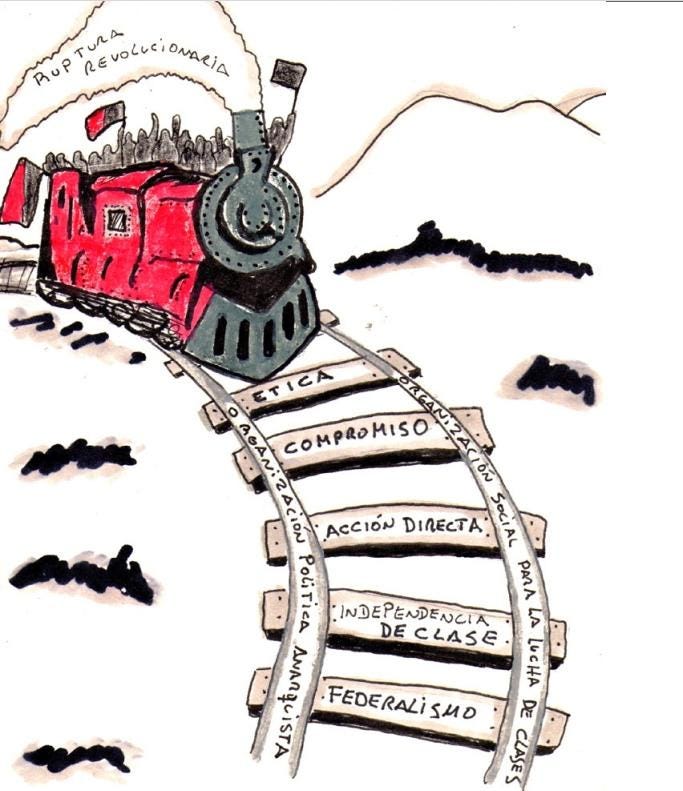
This is where militancy comes in. It’s the boots on the ground, where the rubber hits the road. In English, the concept is often assumed to mean radical or combative, so any tactic or organization is considered militant if it’s spicy enough. But I’m talking more about the committed responsibility to continue carrying the torch, to hold on to a particular vision for a different world and a clear proposal for how to keep working toward it.
Consider how effective the Republican Party is at creating a recognizable and unified political line. Every Republican that does an interview uses the same exact talking points. They receive them in a daily email from the party, and all they have to do is repeat those same lines over and over, making small towns into echo chambers. Their rhetoric is so pervasive that you could accidentally use their wording and immediately be mistaken for one of them. But Republican-style militancy isn’t the only way to go about promoting your agenda.
Some militants are technocratic, with a political practice that mostly consists of recruiting new people who are interested in their expertise. Other militants are more opportunistic, ready and eager to jump on the bandwagon of whatever’s popular. Still, there’s another style of militancy that’s based on maintaining relationships with others and committing time and effort to mutually beneficial endeavors. This could be in the form of a protest march, a union action, or a community newspaper. It’s about normalizing the presence of your political lines through trust and consistency rather than slick lingo and marketing.
When activism doesn’t go beyond a single issue, when organizing stops after one well-attended rally or meeting, it’s not clear where the politics are coming from or where they’re going. Without clearly defined political lines, a lot of vague and indefinite work gets put on local organizations, draining their capacity and leaving the individuals to defend their own boundaries without collective support.
The political lines running in and out of medium and small towns have the potential to increase influence by reaching even the most rural destinations. So, rather than being seen as sectarian ghouls that scare people out of working together, militants should be seen as necessary features of our diverse local culture. They ensure the continual movement of ideas in and out of town, and they help clarify where it’s possible and effective to work together and where it isn’t. Of course, the flip side is that militants from other places shouldn’t be aggressive, capacity-sucking know-it-alls if they want their political lines to get plugged into our local amp.
Carl Eugene Stroud is a member of the Center for Especifismo Studies.