

by: Luis Cervantes
The latest escalation between the United States/Israel and Iran has sent shockwaves through global energy markets. For many outside the conflict area, the first impact is increased gas prices. However, the real economic consequences run far deeper than the price of fuel.
Wars reverberate throughout global markets, reshape domestic political priorities, and redistribute economic power. The costs Americans, and most people around the globe, will face are likely to extend far beyond higher prices at the pump: increased corporate profiteering, worsened inequality, expanding military spending, and strengthening the institutions of domestic security.
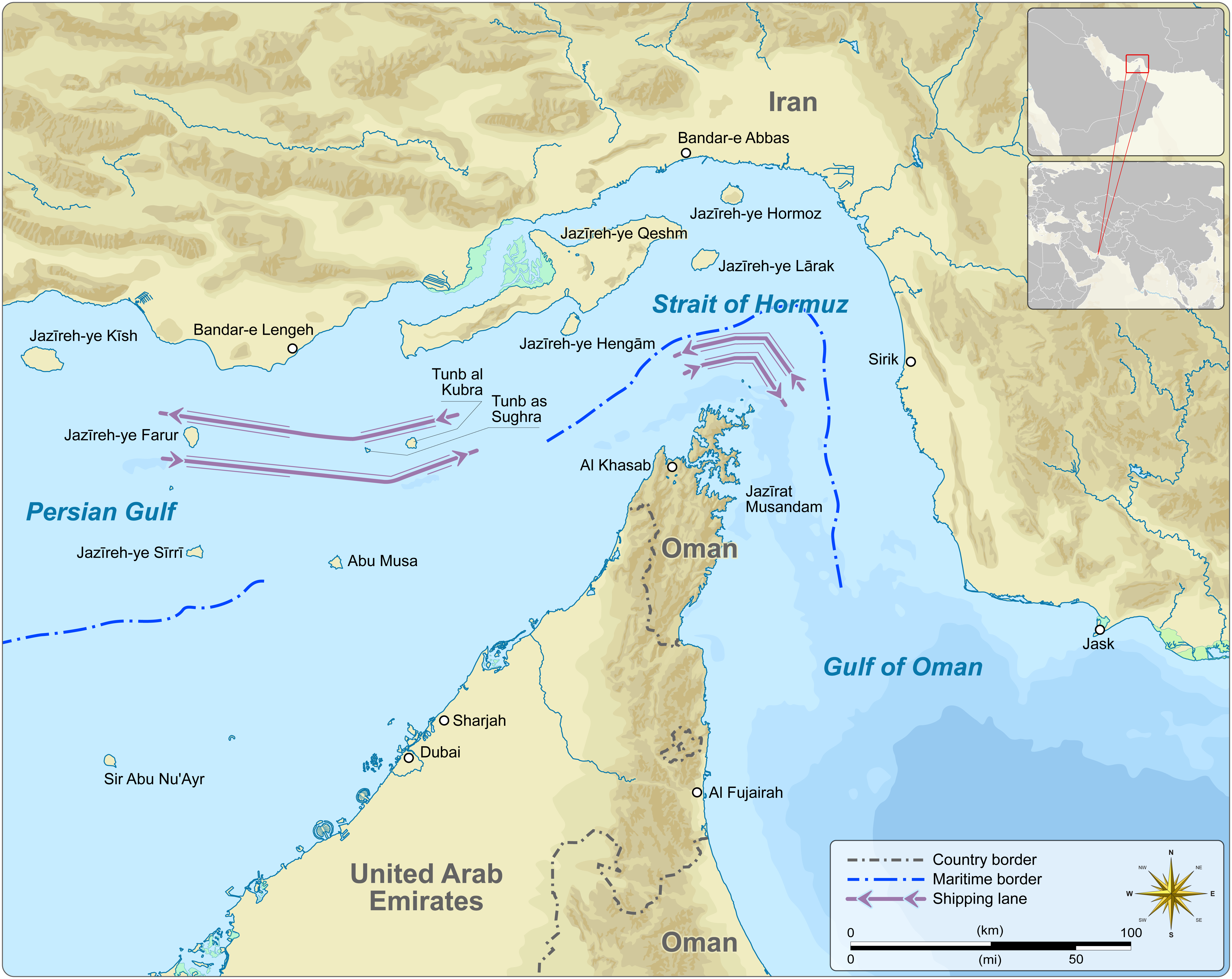
Energy markets are the most visible point of transmission. The Persian Gulf remains one of the most strategically critical regions in the global oil economy. According to the United Nations Conference on Trade and Development, roughly a quarter of the world’s oil supply moves through the Strait of Hormuz, the narrow maritime corridor connecting the Gulf to international markets. In February, an average of approximately 129 vessels passed through the strait each day. Following the escalation of hostilities, maritime traffic reportedly collapsed by 95 percent.
The disruption of shipping routes, combined with attacks on regional oil infrastructure, has forced several Gulf producers to reduce output. Global oil prices responded quickly. Brent crude — the price benchmark for two-thirds of the world’s traded oil — surged over $116 per barrel. Gasoline prices increased 16 percent in Washington State from the previous month, and in some places like California, surpassed $5.25 per gallon.
The sudden spike caught markets off guard. The International Energy Agency coordinated with several national governments to perform a historically large emergency release of strategic oil reserves in an attempt to temper prices. Even so, oil prices remain significantly elevated.
Because oil sits at the center of modern production systems, the effects extend well beyond fuel. Energy and petroleum products costs are embedded throughout agriculture, manufacturing, transportation, and global logistics networks. When oil prices rise, the result is inflationary pressure across the economy, with cascading effects on household budgets and financial markets.
At first glance, the United States might appear relatively insulated. Domestic production now satisfies roughly 70 percent of American oil demand, a transformation driven largely by the shale boom of the past two decades. Imports account for the remainder. Only about 9 percent of those imports originate in the Persian Gulf. Canada supplies 60 percent of U.S. oil imports.
Yet oil remains a globally priced commodity. Even limited disruptions in a critical transit corridor like the Strait of Hormuz can send shockwaves through international benchmark prices, which in turn shape energy costs across the American economy.
Many analysts therefore expect the conflict in Iran to contribute to inflation. Nevertheless this expectation often assumes that prices respond primarily to straightforward supply-and-demand dynamics. However, crises frequently open the door to something else.
Periods of geopolitical shock can create opportunities for large firms to expand profit margins. Political economists Isabella Weber and Evan Wasner describe how “seller’s inflation” emerges when dominant firms use moments of crisis to raise prices beyond what underlying cost increases would justify. In highly concentrated industries — such as energy — companies can take advantage of widespread uncertainty to implement price hikes that might otherwise face resistance.
Recent energy crises illustrate the pattern clearly. Research by Gregor Semieniuk and colleagues shows that supply disruptions have repeatedly coincided with record profits among major fossil-fuel corporations. Under such conditions, inflation becomes not merely a macroeconomic phenomenon but a distributive one. Rising living costs for households appear first as higher gasoline and transportation costs alongside extraordinary gains for corporate actors.
However, the deeper effects will emerge elsewhere in the economy. Economic crises rarely distribute their burdens evenly. Moments of disruption often become opportunities through which wealth and power are reorganized, as corporations expand profit margins while governments redirect public resources toward stabilizing the political economic system. In this sense, geopolitical crises do not simply raise prices, they reshape the distribution of income and wealth, accelerating structural changes already underway within the political economy.
Energy shocks also tend to reshape political agendas. Calls to expand fossil-fuel extraction quickly return to the forefront of policy debates, often framed as matters of national and fuel security. Demands for increased drilling, both domestically and abroad, are already gaining traction as policymakers search for ways to stabilize energy markets.
Yet even if new extraction projects were rapidly approved, they would do little to address the immediate disruptions caused by war. Large-scale energy infrastructure takes years to develop. In the meantime, the environmental costs of conflict — from damaged oil facilities to expanded fossil-fuel production — may deepen the global economy’s dependence on carbon-intensive energy systems.
At the same time, geopolitical crises frequently accelerate another process: militarization. Escalating conflict in the Middle East is likely to intensify pressure for increased military spending. In the United States, proposals are already circulating to expand the defense budget to roughly $1.5 trillion annually, an extraordinary reallocation of public resources and deepening national debt.
Such spending priorities carry significant social consequences. Every dollar directed toward military expansion is a dollar not invested in housing, healthcare, education, or social infrastructure. For working-class households already facing rising living costs, the result can be deepening economic insecurity.
Militarization also has political implications. Periods of international conflict have historically coincided with the expansion of domestic security institutions and the strengthening of the state’s coercive capacity. Governments confronting external threats frequently consolidate authority internally, building surveillance systems and security infrastructures in the name of national stability.
The United States provides a clear example. Following the attacks of September 11, 2001, the creation of the Department of Homeland Security and the institutionalization of Immigration and Customs Enforcement (ICE) dramatically enlarged the country’s national security apparatus. Critics, mainly anti-war and immigrant rights organizations, warned at the time that institutions constructed under the justification of counterterrorism could eventually be deployed in broader contexts of domestic political control.
Recent violations of constitutional rights, civil rights, and killings by ICE agents have demonstrated those concerns were not misplaced. Moments of economic crisis and social unrest have often been met with expanded state repression directed toward labor movements and political dissent. When inequality deepens, wages stagnate, and living costs rise, the potential for social conflict increases.
Increased militarization and a greater willingness to use force against a country’s own people become necessary recourse for the beneficiaries of capital directly involved in the destructive expansion of the system — who in the case of the United States, and most Western countries, tend to be white men. As this group struggles to maintain its dominant role in the domestic and global political economy, they wield influential power through aligned corporate news, social media influencers, and conservative talk-show hosts that manipulate disenfranchised people that identify with them ethnically and religiously. Fomenting polarization and othering fiercely reinforce the interests of a small minority of the population in ways that justify increased authoritarianism and domestic militarization.
Some analysts warn that this increasing polarization and institutional instability could push the U.S. toward what political scientists call an “anocratic” condition: an unstable political system situated between democracy and autocracy, a precursor of civil war.
In this sense, international war and domestic political economy are closely intertwined. External conflict can justify the expansion of military and security institutions that later become tools for managing internal instability.
These dynamics unfold against a broader shift in the global order. The international system that emerged after the Second World War rested on the economic dominance of the United States. That dominance enabled Washington to function as a central organizer of global trade, finance, and security arrangements.
Today that order is coming to an end. The emergence of a more multipolar world has intensified geopolitical competition over resources, markets, and strategic influence. As global economic leadership becomes less stable, states often turn more heavily toward military power in order to secure their position. Declarations of increased militarization and spending have resounded across the globe as states prepare themselves to face a fragmented international political economic order.
The first effects of war may appear in the price of oil, but the deeper consequences unfold in the structure of the political economy itself. Crises triggered by conflict often redistribute wealth upward while expanding the institutions of military and domestic security.
For working people, the real cost of war is therefore not only paid at the gas pump. It is paid in rising inequality, shrinking social investment, and the steady expansion of a state increasingly oriented toward managing instability rather than resolving it — all as response to a declining system requiring renewed structures to ensure capital accumulation. For the U.S. in particular, it is also an attempt to save the social structure of white supremacy that was foundational to the development of now failing U.S. capital. As history repeatedly shows, the burdens of this economic reconfiguration rarely fall on those who benefit from it.
All of Works in Progress Issue 1 was published directly to our website, read the rest here.