

by: Caelen McQuilkin
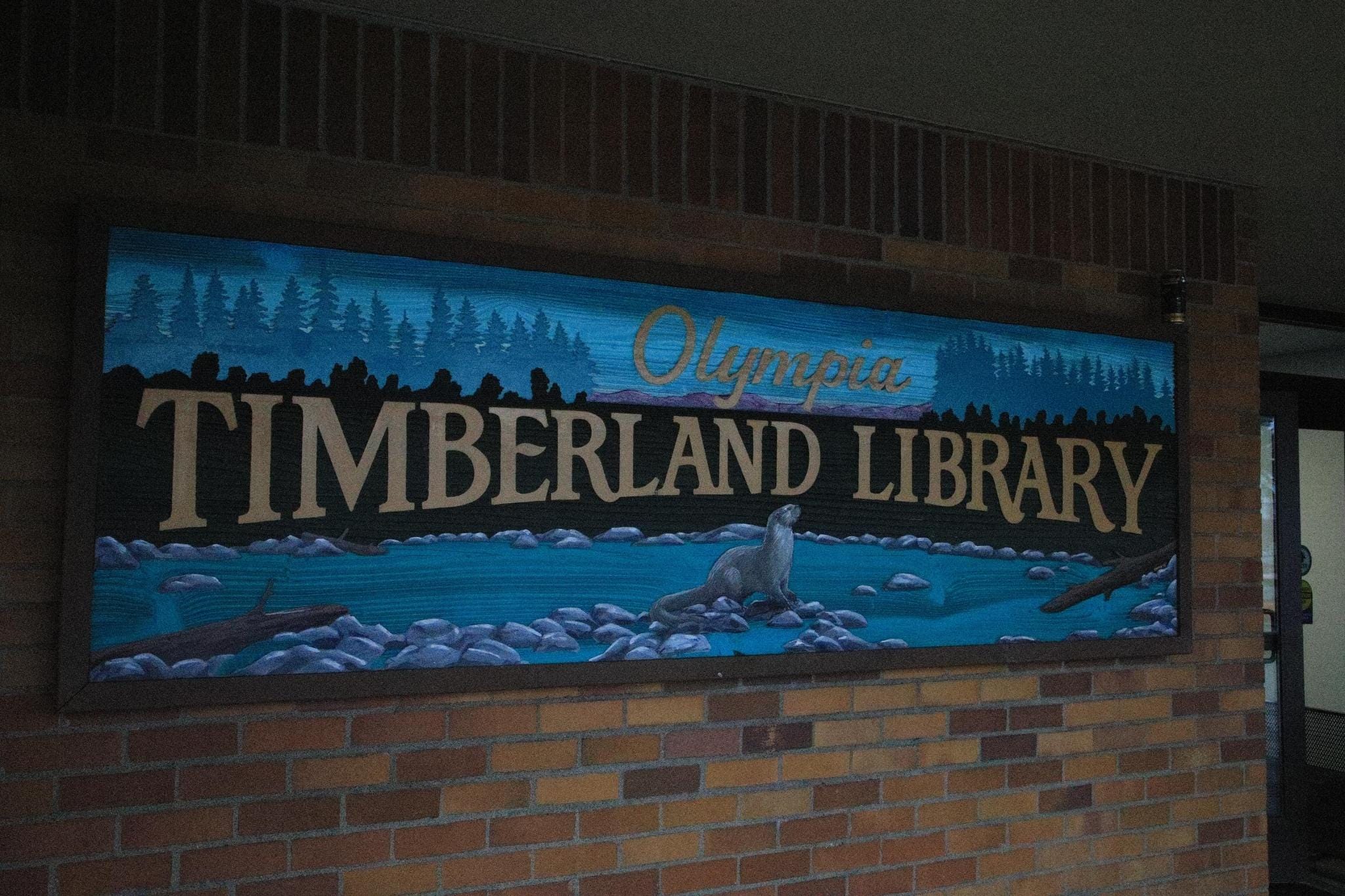
On March 13, 2026, Timberland Regional Library (TRL) announced its plans to lay off 61 front-line library workers in response to its budget shortfall. The shortfall, which is currently estimated to be about $3.8 million according to The Aberdeen Daily World, was announced in late January 2026.
Current and former librarians, board members, patrons, and advocates say that this story has deep roots of contention in the library system. The budget shortfall doesn’t come as a surprise, librarians say, and perhaps even more importantly, the cost-cutting response falls in line with a long history of the administration’s priorities opposing front-line staff and the communities they serve.
To better understand what shapes the 2026 budget shortfall, some librarians pointed to the year 2018, when the administration released its Capital Facilities Proposal (CFP), which included rural branch closures, layoffs, and shifts to alternative library models like Expanded Access. Community response, and the ultimate failure of the CFP, reveals a deep disconnect between the TRL administration’s vision for its libraries, and the libraries that front-line staff and patrons are struggling to create and keep alive. While the administration’s policies move towards efficient, streamlined branches and concentrate most services in densely populated areas, many librarians and patrons within the TRL system are calling for increased access to physical library space that fosters community as well as information access.
2018 Capital Facilities Proposal
In September of 2018, the TRL Administrative and Public Services teams released the 98-page Capital Facilities Proposal. The proposal analyzed data of TRL’s expenditures and community engagement. The introduction proposes new changes for the library system to “adapt to changes, to invest in new opportunities, and seek out new possibilities.”
To understand how the CFP connects to the 2026 budget shortfall and staff layoffs, former TRL library manager Mary Prophit says there’s an important story beginning in the Mountain View Library, located in the small town of Randle in eastern Lewis County.
Prophit, who worked as a manager and assistant at the Mountain View Library, started there in December 1992, at a time when “we didn’t even have the Internet or anything. We had books.” She described her approach to library work as almost entirely centered around patrons. “When a patron walks through the door, you stop everything, you take care of the patron,” she said. “We used to have a saying: ‘people are the heart of the library. Quality service begins with me.’” Seeing people at the heart of the library, Prophit said, meant focusing on listening to patrons and adapting the library’s programming and priorities to fit the needs of the community it serves. For the Mountain View Library, this meant outreach at local schools, opportunity to make remote Senate testimony, veteran service programming, and Teen Night events that helped local high schoolers find a stronger sense of community.
“I used to wake up excited to go to work,” Prophit said. This changed around the year 2018, when administrative priorities began shifting, in part exemplified by the introduction of the CFP. In August 2018, a month before the CFP was publicly released, Prophit received a call from her supervisor and boss at the time. The supervisor informed Prophit that TRL was choosing not to renew the lease for the Mountain View Library’s building. “It came completely out of the blue,” she Prophit said. “I started crying. I was like, ‘I don’t understand, why my library?’ and [the supervisor] said, ‘you have to understand that your library is just one piece of the bigger picture.’”
Section V of the Capital Facilities Proposal analyzes each of TRL’s branches using data like projected population growth, number of items borrowed, and daily operating cost. Using this data, the CFP proposes a new library service model for each branch. The proposals, overall, aimed to close or consolidate rural library branches and concentrate library staff and programs into a few “full-service hub locations” in higher-population areas. Only these libraries would provide “the full spectrum of library services to the public,” services like meeting rooms, technology stations, more extensive book collections, and regular programming. Most rural branch buildings, meanwhile, were proposed to be replaced with mobile services (library vans that drive around a large geographic area and offer Internet connection, book check-outs, and programming), remote lockers (pickup and dropoff points where patrons with a library card can access books they check out), LibraryExpress stands (“coffee-stand style service points” staffed by 2 librarians, where patrons can check out books or “park and take advantage of 24/7 WiFi”) or expanded access buildings (unstaffed building that patrons with a library card can enter).
In Grays Harbor County, for example, the CFP proposed to renovate and “further develop” the Aberdeen branch while closing the Hoquiam, Amanda Park, Montesano, and Elma branches, consolidating those into one physical building in Elma and the others into mobile services based in Aberdeen.
The Mountain View Library too, was suggested for consolidation with Salkum and Packwood, and replacement with mobile services and LibraryExpress stands.
While the CFP describes these changes as future-looking and cost-saving, TRL librarians, especially those working at the rural branches proposed for drastic cuts or closure, saw things differently. “How does a van replace a building?” Prophit asked. She explained that the administration called these proposals “reimagined libraries,” but the reason why this reimagining required changing staffing and cutting costs so drastically, librarians didn’t know. “They were kind of implying ‘something’s gotta give’,” said Prophit. “We were confused -- was it because of a budget, or because of ‘reimagined’?”
The CFP’s “Revenues and Expenditures” section does not provide explicit numbers, but it reads: “TRL has reached the point where revenues are not keeping up with expenditures.” The proposal continues to state, “It is more cost-effective to provide services in areas with higher populations, yet much of the library district remains rural with a lower population density.” Indeed, when describing the new service models it proposes for reaching rural patrons, the plan most often uses language related to cost-cutting. The proposal describes the LibraryExpress model as “convenient, fast, and low-cost,” and, when describing why full-service hub locations will be established in higher-population areas, writes, “these locations take advantage of the economies of scale.”
In Randle and the other rural communities where libraries were proposed for closure, patrons were devastated. “My whole mission in life was to make my library an indispensable part of my community,” Prophit said. “That’s what I thought my job was, and I did it well.”
Public comment at the September 26, 2018 TRL Board of Trustees meeting shows the degree to which proposed closures impacted patrons and librarians.
Hundreds of library patrons shared, angrily, emotionally, and sometimes with humor, about how important the physical space of a library was to them. “You can’t uproot a library, move it to a new location, and expect the same success,” one Randle resident shared. “The community needs the library, and you can tell how hard they are willing to fight for it.”
“It would give quite a financial burden to me to have to pick up all the subscriptions of the magazines that I get. The gas — I could not come to a library,” shared one patron from Ocean Park, whose branch was slated for closure.
As the comments continued, patrons shared personal stories and how the space of the library, and its very existence in their town, went deeper than just the building itself. As one patron said: “Randle has lost mills, schools, logging, senior services, access to forest lands, jobs, and more. We have only one public community service building. And now they want to take that away from us too. This really hurts.”
Prophit describes the meetings about the Mountain View Library’s closure as some of the most painful yet also rewarding moments of her whole career. It showed her how integral and important the Mountain View Library had become to her community, yet only because that library’s very existence was on the line.
All of Works in Progress Issue 1 was published directly to our website, read all articles here.
Fallout and the 2026 Budget Shortfall
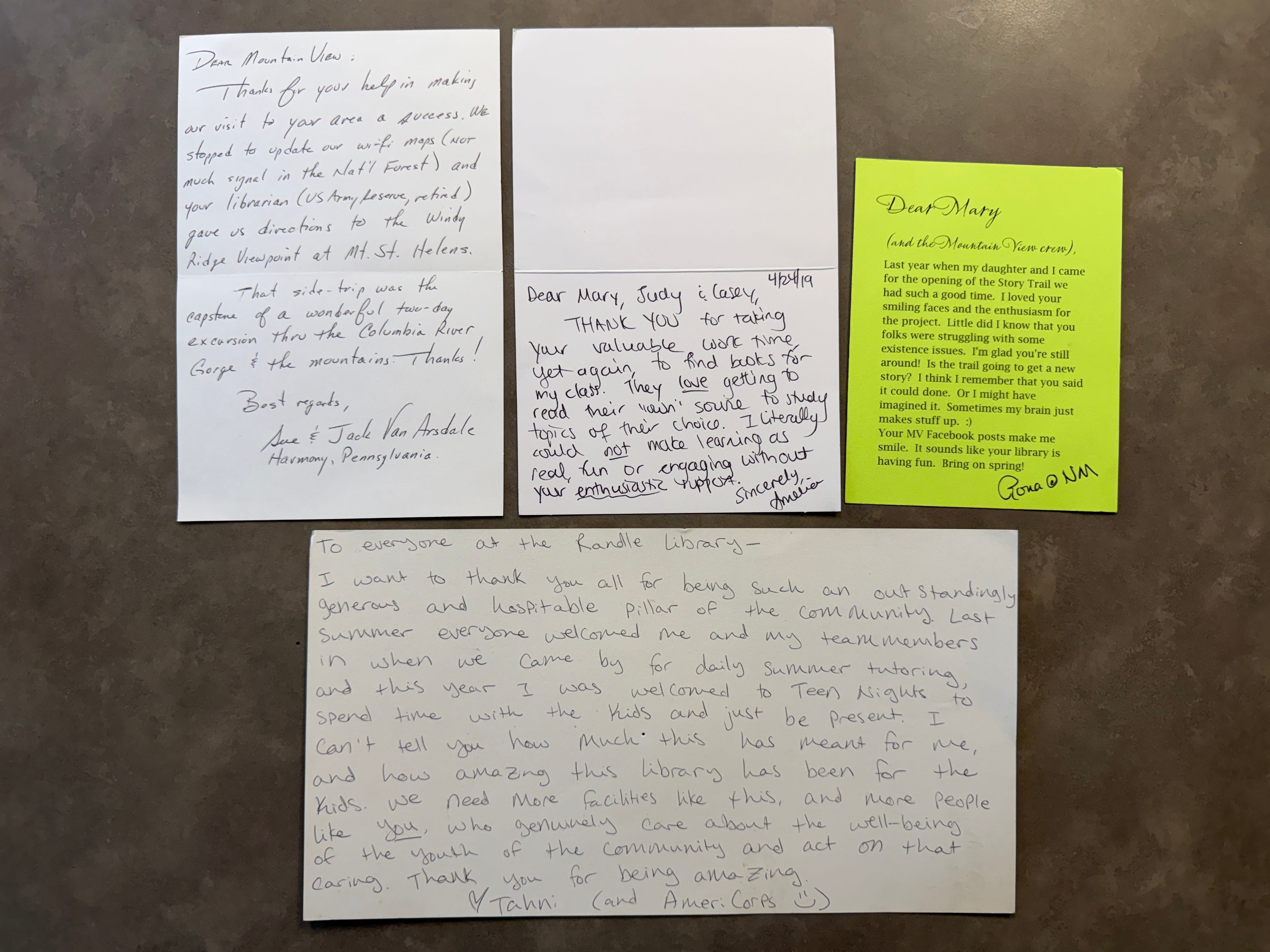
In 2018, faced with pressure from patrons and communities across the TRL system, the Board of Trustees ended up voting down the CFP. But eight years later, public comment in board meetings and concerns from TRL librarians sounds similar. “The fact that you are allowing the administration to destroy our sacred place is abhorrent,” said one public commenter in the March 18 board meeting. “It’s where I bring my child to learn to love books, to learn to love knowledge, and to learn to be part of the community.”
“It’s where I bring my child to learn to love books, to learn to love knowledge, and to learn to be part of the community.”
Another shared -- “I learned to read, I learned to enjoy books, because the Timberland Regional Library was so successful in their outreach ... And you have completely failed us. You have completely failed the children in the rural places.”
Former and current TRL librarians say that since the stop to the CFP, the TRL administration has continued to implement policies that diverge further and further from the wants and needs that front-line staff and patrons express.
“This administration is very out of touch with what happens at a building,” said a current TRL librarian, who preferred to remain anonymous due to fear of retaliation. They are referred to here as Librarian A. “They’re ... treating us like, I don’t know, robots. Like things that accomplish their work that don’t have means.”
Brooke Pederson, former manager of the Amanda Park Library and current Grays Harbor library substitute, wrote to the TRL administration in March 2026 with concerns about the workplace culture. “The message I’m receiving from TRL’s current decisions, and from the pattern of toxic employment practices I’ve witnessed over the past 2 years, is that rural library service is expendable; librarians are expendable; front-line service is expendable; access is expendable. Rather, backline administration and automation are the future of libraries,” she wrote.
Over the past few years, TRL has introduced Expanded Access (EA) hours to some library branches. Similar to some of the formats laid out in the CFP, an Expanded Access library has no staff, and patrons apply for library cards that allow them to access the building and use the library’s services themselves. While some libraries originally started EA to expand upon the library’s normal staffed hours, new TRL policy has pushed some branches to replace staffed hours with EA hours. Currently, 12 of TRL’s branches offer EA hours, and the Naselle branch uses entirely EA hours with no staff. After the administration’s announcement of layoffs and cost-cutting measures on March 13, three more libraries — Amanda Park, Hoodsport, and McCleary — will transition to the full EA model.
Patrons and librarians say that EA limits access to the library. In order to get a card, patrons need a verifiable address, must be over fourteen years old, and must travel to another physical library to pick up the card. This limits and in many cases cuts off library access for many people, including unhoused patrons, young patrons, and patrons without easy access to transportation. “You have to have a lot of privilege to be able to get those [EA] cards,” said Kylie McQuarrie, an organizer with the Patrons Coalition for Local Libraries. And even if a patron is able to get an EA card, their ability to use library resources decreases without librarians to help. “If you don’t know how to use the library resources already, you won’t be able to use them,” she said. Susan Leite, former manager of the Amanda Park library, said that most importantly EA means libraries will lose most of their programming. “Taking the staff away means that the kids can’t come down for story time,” she said, describing how the Amanda Park library, which will now transition to entirely EA, is located close to the local school. “A huge part of getting kids to be lifelong learners is having them come down for story times ... it’s a huge decrease in the way libraries can serve their communities, at a time where really people need library services more than ever,” she said. Librarian A described that the administration’s decisions about changes and new policies in branches often feel bizarrely out of touch with the community’s actual needs. Money is spent on things like new trash cans and rearranging the book drop locations inside the library, not staffing to keep programs running or materials that patrons show their community needs.
These decisions also typically don’t include input from librarians or patrons, Librarian A said. “A lot of times we’re told we have to sit with a change they have made for a few months before we’re allowed to say anything about it.”
Pederson’s list of observations of the current TRL workplace includes “staff expecting policy changes to further restrict their work and patron services,” “staff being expected to pay more attention to their work processes than the patrons standing in front of them,” and “staff feeling their feedback is not welcome and that there will be retaliation against them for speaking out about anything.”
In an October 2018 Board of Trustees meeting about the CFP, a Packwood resident spoke to a similar disconnect. He described feeling like the TRL administration measured a library’s success by the number of books checked out there. “Metrics like internet use, and intangible things, like being the hub of your community, should be some of the metrics,” he said.
McQuarrie shared similar thoughts. “The library is about books. It is also about 10 billion other things, and one of them is community,” she said. “There are so many things you can do that you gain access to at the library, that you need a librarian there to point you towards ... And in fact, what they’ve done, is they’re going to close these branches, they’re going to fire these people, and they are going to decimate quality of life in these rural places.”
But just like in 2018, patrons have not given up in fighting for the libraries they want. Breaking developments are still occurring as patrons and front-line staff continue shaping the library’s story. On the afternoon of March 25, 2026, Executive Director Cheryl Heywood submitted a letter of resignation. She was not present at the Board meeting that evening, but the Trustees announced the update. In the public comment that followed, patrons sounded relieved and elated, and encouraged the Trustees to accept Heywood’s resignation and hold the rest of the administration accountable. Patrons proposed new ideas for re-envisioning the library system to better reflect patron and librarian priorities. “TRL needs a fresh, honest approach to this mess that was created by Cheryl and her cohort,” one patron commented.
Budgetary Mystery
The mystery behind all of these changes, many librarians and advocates say, is that these changes to the library system don’t appear to actually cut its costs.
In December 2018, The Daily World reported that the CFP proposals would have introduced new costs roughly equal to the money they would have saved — while staffing cuts and information technology changes would have saved TRL about $800,000 to $900,000 total, documents obtained by the paper’s open records requests showed that the implementation of the new services outlined in the CFP would have totaled “just more than $1 million.”
The 2018 TRL Board of Trustees expressed concern over these discrepancies and the lack of communication surrounding it. The Board’s 2018 Performance Evaluation reads: “[It] is of great concern that there were no budget committee meetings called to discuss the ‘financial cliff’ facing this organization […] Committee members were alarmed to hear that significant reductions in facilities and/or staffing would be necessary to close the gap between revenues and expenditures. The plan presented to the Board on Sept. 22 [2018] did not provide sufficient evidence of financial impacts of proposed changes, while indeed, many proposed changes would result in additional expenditures for TRL.”
Prophit, Hirschi, and Leite all say they think the administration may have concealed the current budgetary shortfall and then revealed it in order to push through more elements of the rejected CFP.
“I honestly think it was purposeful,” said Leite. “I think they purposely spent more money than they knew they had, and I think this is their way to get the CFP, by reverse engineering it.”
In the years since 2018, TRL’s finances have not improved. The Financial Intelligence Tool (FIT) used by the Washington State Auditor’s office shows TRL’s financial status reaching “concerning” status in the year 2022. FIT is designed to show whether the organization’s funds are being spent in line with the revenue they receive.
In 2020, former TRL Board Member Brenda Hirschi resigned over her concerns about the budget and the administration’s lack of action to address it.
“Using my past nearly three decades of financial management education and experience, I have studied the TRL budgets, financial reports, and trends of patron core services from 2012 to present,” she wrote in her resignation letter. “The people in this five county region are not getting their money’s worth. The taxpayer’s property tax contribution to TRL is mainly used to support the bureaucracy at the Administrative Service Center with little or no oversight from the trustees. Neighborhood libraries struggle to meet the core services patrons would like to see.”
Hirschi wrote that her primary budgetary concern was the portion of funds used by top TRL administrator’s salaries, including Heywood’s 2020 approval to increase one top administrator’s salary from $84,975 to $104,508 in one year.
Heywood did not respond to request for comment.
“You’ve only got so much revenue that’s coming in, so you’ve got restraints you’ve got to work within,” said Hirschi in an interview with Works in Progress. “I kept on saying, there’s something going on here with these salaries ... And that is why I said, ‘this is what is coming.’ I tried to tell those county commissioners, ‘this is what is coming.’”
According to Chris Chrzan, Public Information Officer for TRL, 68% of TRL’s yearly expenditures go towards salaries and benefits. “Over the years, TRL has pursued a variety of strategies to maintain library access with fewer staff in an attempt to minimize the impact on the public and preserve access to services ... Although we have been working to find ways to adjust over the years, we have now reached a point where gradual changes are no longer sufficient, and staffing costs must be reduced in order to find a sustainable path forward,” he wrote in a statement to Works in Progress. The TRL employee union and other advocates question why administrators’ salaries are not also being reduced, as they compromise part of the 68%, too. When a Trustee asked this question in the March 18th, 2026 board meeting, HR administrator Kandy Seldin responded that salaries are not the cause of the budget shortfall as they have stayed within their allotted 68% of the budget over the last few years.
Chrzan stated that TRL has been aware of the potential budget crisis since 2022, and chose to make incremental changes over time. “Essentially, major service reductions, and especially layoffs, are a last resort,” he wrote. “While the costs versus revenue trend lines were converging, the preferred strategy of library leadership and the Board has been to pursue conservative, incremental change that is minimally disruptive, whenever possible.”
Librarian A said that it’s more important to look at the library’s actions over their statements. “This administration can say they love this library, they can say they love this staff,” they said, “but their actions are not showing it.”
Caelen McQuilkin is a reporter from the high desert of eastern California who has loved the green of Olympia since moving here in August. They love reporting as a way to build connections while reflecting a place's complex picture.
All of Works in Progress Issue 1 was published directly to our website, read the rest here.