

By Isaac Wagnitz
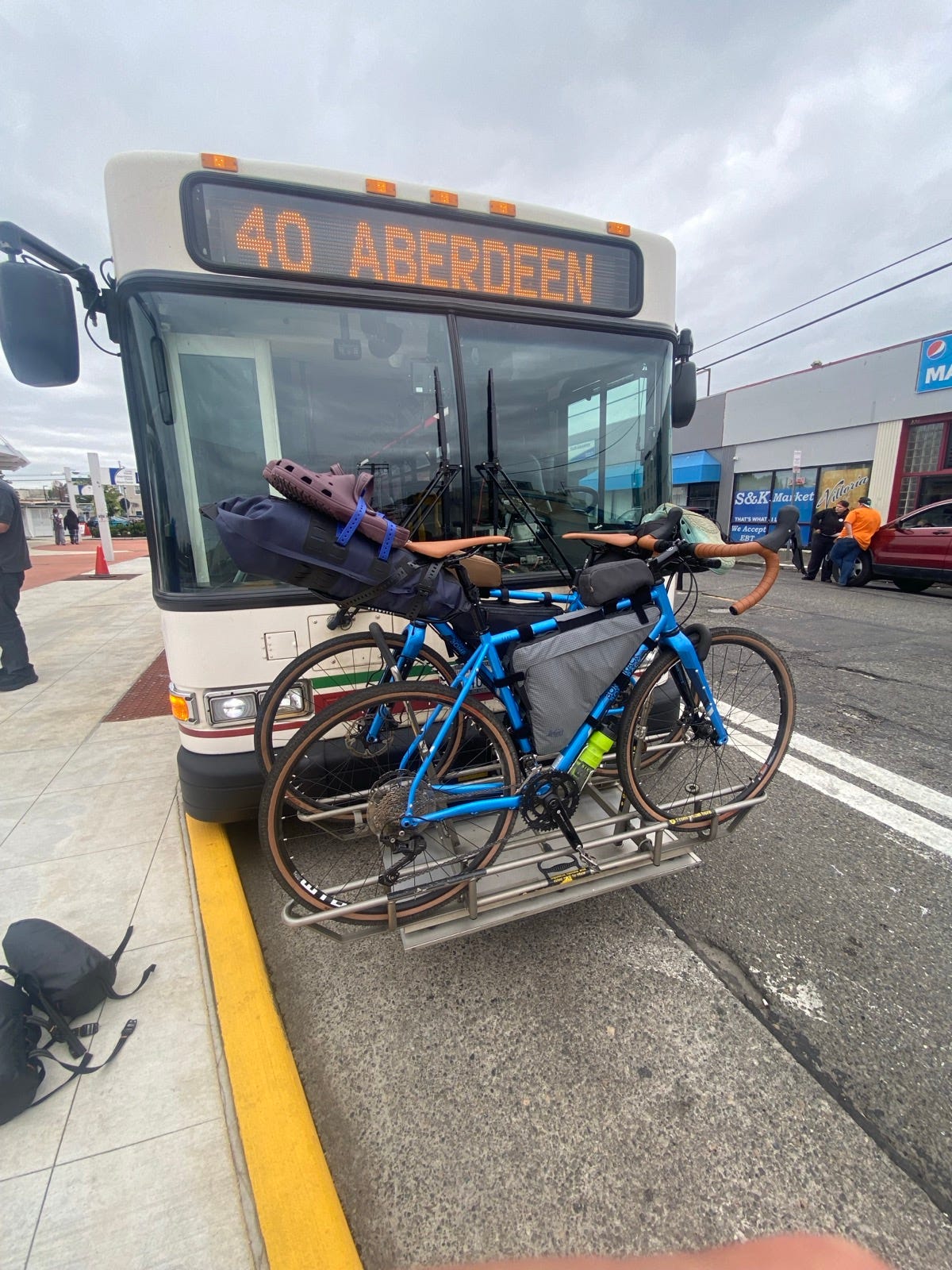
Amalgamated Transit Union (ATU) Local 1765 is the latest public-sector union in our area to be embroiled in contentious negotiations with a recalcitrant employer. ATU 1765 represents transit drivers in Thurston, Grays Harbor, and Pacific Counties in western Washington. Their current contract negotiations with Grays Harbor Transit (GHT) have been ongoing since August of 2025, and drivers are feeling the pressure as management refuses to make a fair deal. Works in Progress sat down with ATU 1765 President Mark Neuville and Executive Board member Kenny Farver to discuss the situation.
According to Neuville, the union’s key concerns in Grays Harbor are around wages and scheduling. Under the current contract, new drivers with GHT start at $24 an hour and are often only given a part-time schedule. However, they are expected to be on-call 24/7, making it difficult for them to find supplemental employment or plan their lives. These conditions also hinder the recruitment of new drivers, aggravating GHT’s labor shortage and placing additional pressure on existing drivers. A convoluted system for assigning work shifts has also made it easier for management to engage in favoritism rather than following seniority.
The union is asking for a 10 percent per year pay increase over three years to alleviate economic insecurity among GHT drivers due to inflation and cost-of-living increases. Neuville estimates that at least 30 percent of drivers are on some kind of food assistance. 1765 is also seeking a single simplified list for assigning shifts to ensure greater fairness and prevent burnout. The union would also like to see a robust joint union-management safety committee to respond effectively to incidents and concerns arising on the job, but have encountered resistance there as well. Safety issues are of particular concern given a number of recent assaults against transit drivers in various communities around Washington.
GHT’s response to 1765’s first contract proposal was to simply say “not interested” and suggest sending negotiations straight to mediation through the Public Employee Relations Commission (PERC) after only three bargaining sessions. PERC is a state entity that adjudicates labor disputes involving state and local public entities in Washington. Now all bargaining sessions must include an advisor from ATU International, a PERC mediator, and GHT’s legal advisor, which has caused long delays between meetings.
Farver stated that GHT has engaged in a pattern of retaliation and intimidation against union activists and bargaining team members, targeting them for what the union believes are unfounded and/or disproportionate disciplinary actions including terminations. Local 1765 has filed Unfair Labor Practice (ULP) charges relating to this conduct with PERC; GHT has denied all the allegations in that filing.
This situation bears strong similarities to 1765’s bargaining with Intercity Transit (IT) in Thurston County last year. There too, the employer made unreasonable delays to the bargaining process and engaged in retaliation against union members. Two IT drivers were been wrongfully terminated for taking part in legally-protected union activities. They were only recently reinstated with back pay due to a finding by PERC.
Like last year’s bargaining with IT, and previous bargaining with GHT in 2022, this round of negotiations in Grays Harbor has also been marked by the involvement of the legal firm Summit Law, and specifically attorney John Lee, who has played a prominent role in advising the employers in all these cases. Summit Law has a widespread negative reputation among labor unions in Washington for their history of supporting anti-union employers. Neuville and Farver stated that the union believes Summit Law is at least partially responsible for the employers’ tactics in these cases.
When asked for comment, Rachelle Martin, President of the Thurston-Lewis-Mason Central Labor Council, stated that Summit Law had also advised Timberland Regional Library (TRL) in their last bargaining with employees represented by AFSCME Local 3758B. Martin has been active in efforts to support TRL workers at risk of layoffs after the library system announced a dire budget crisis recently, in a major reversal from the financial picture TRL leadership painted during bargaining.
Beyond the involvement of Summit Law, Neuville asserts that situations like the one in Grays Harbor are also made worse by the fact that PERC’s caseload is so backlogged due to lack of resources. This means that penalties for ULPs by employers can be delayed for many months, making it easier for employers to treat these penalties as merely a cost of doing business. The National Labor Relations Board (NLRB), the federal body which adjudicates private-sector labor law disputes, is in a similar situation, and many large corporations also treat NLRB penalties as a regular operating cost.
Wider concerns about public entities adopting the mindset of for-profit companies are well-founded in cases like that of 1765 and GHT, where a government employer has retaliated against workers for supporting reasonable demands in a new contract, and has spent large sums of taxpayer money to avoid coming to a fair deal with its employees.
As it stands now, ATU Local 1765 and GHT are continuing a difficult set of negotiations. Farver and Neuville stated that support for the union is strong among GHT drivers, but workers are afraid to speak up due to fear of retaliation. This is another parallel with the recent situation at TRL, where many former employees spoke of widespread intimidation against workplace activists. By that token, like TRL workers, GHT drivers are counting especially on members of the public to help advocate on their behalf.
One way community members can help is to attend GHT’s board meetings and make public comments in support of the workers and their demands for a fair contract, living wages, and transparent scheduling. These take place the 2nd Tuesday of every month at 4:00pm, at the GHT Administrative Offices (343 W Wishkah St, Aberdeen, WA 98520).
Like recent debacles at IT and TRL, the situation at GHT points to the need for working people to reassert their influence over their public institutions. If we want our communities to thrive, we need our local governments to be accountable to members of the public, including civil servants, and not a few heads of administration or outside attorneys.